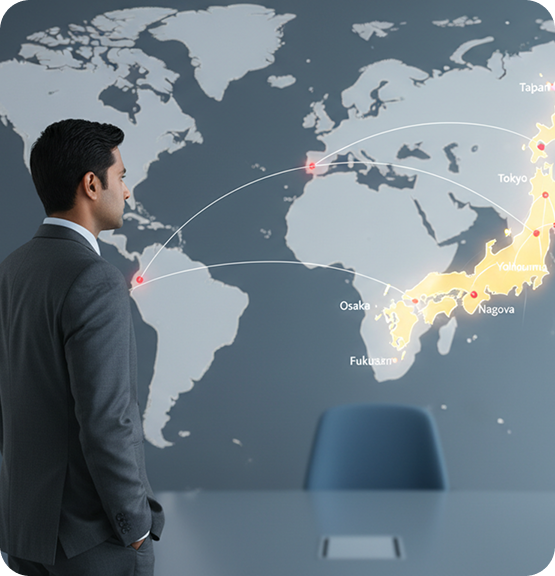

Offshore Development

Japan’s Offshore Development Landscape

Japan is steadily expanding its offshore development activities, holding a 15% share in the global offshoring market.


While still smaller compared to the US and Western Europe, Japan’s reliance on offshore partners is accelerating every year, especially among small and mid-sized enterprises.

Key Highlights

01-10 employees
0 %
10–50 employees
0 %
50–100 employees
0 %

Offshore Development Trends in Japan

Company Size Doing Offshore Work

100–500 employees
0 %
500–1000 employees
0 %
5000+ employees
0 %

Industry Sectors Using Offshore Development

Japan’s offshore work is concentrated in IT and digital transformation domains.

Top Sectors:

IT Systems & Software

0 %

Manufacturing Systems

0 %

Service Industry

0 %

Retail / Wholesale

0 %

Real Estate, Logistics, Construction

0 % Each

Most Outsourced Service Types

Cloud and mobile-based systems lead the offshoring demand.

Top Offshore Service Categories

Web Services (B2C)

0 %

Smartphone Applications

0 %

Web Systems (B2B)

0 %

AI Systems

0 %

Core Systems

0 %

VR/AR

0 %

Blockchain

0 %

Web Design

0 %

Gaming Systems

0 %

Popular Offshore Destinations for Japan

Japan works with multiple Asian countries, but the market is shifting based on cost, capability, and cultural compatibility.

Top Destinations

Vietnam

48%

Many firms with Japanese-speaking engineers

Many are Japan-owned

Philippines

21%

English-language product localization

Bangladesh

8%

Low cost, strong engineering base

India

13%

Large-scale system development

Myanmar

4%

Low cost, proximity to Japan

Ukraine

2%

ICT systems and wartime digital support

Offshore Development Cost Comparison

Average monthly cost of foreign engineers working with Japanese offshore companies (2023).

Programmer (USD/month)

China

$3,367 (+20%)

Vietnam

$2,681 (+27%)

Myanmar

$1,831 (+12%)

Philippines

$2,389 (-1%)

Bangladesh

$2,942 (+49%)

India

$3,389 (+46%)

Costs of Offshore Development in Japan

Understanding cost expectations is essential before entering the Japanese IT market. Offshore development remains an attractive model for Japanese companies due to talent shortages — but cost variations across countries influence hiring decisions and project budgets.

Costs of Offshore Development in Japan

Japanese companies benchmark offshore engineering costs across Asia. Below is the latest comparison:

CountryProgrammerSenior EngineerBridge SEProject Manager
China 3,367( 20%)4,119 ( 19%)5,286 ( 6%)6,143 ( 7%)
Vietnam 2,681 ( 27%)3,275 ( 23%)3,849 ( 12%)5,292 ( 37%)
Philippines 2,389 ( 1%)3,555 ( 7%)5,417 ( 14%)4,722 ( 8%)
Myanmar 1,831 ( 12%)3,611 ( 43%)4,555 ( 41%)6,500 ( 55%)
Bangladesh 2,942 ( 49%)3,075 ( 16%)6,064 ( 31%)3,909 ( 27%)
India 3,389 ( 46%)4,583 ( 33%)6,286 ( 39%)7,429 ( 33%)

Key Insights From the Cost Comparison

When Costs Increase

Hidden Costs to Anticipate

Explore Japan’s Startup Ecosystem

Understand how startups and offshore teams collaborate to drive innovation in Japan’s technology market.


PSEB TechBot AI Assistant