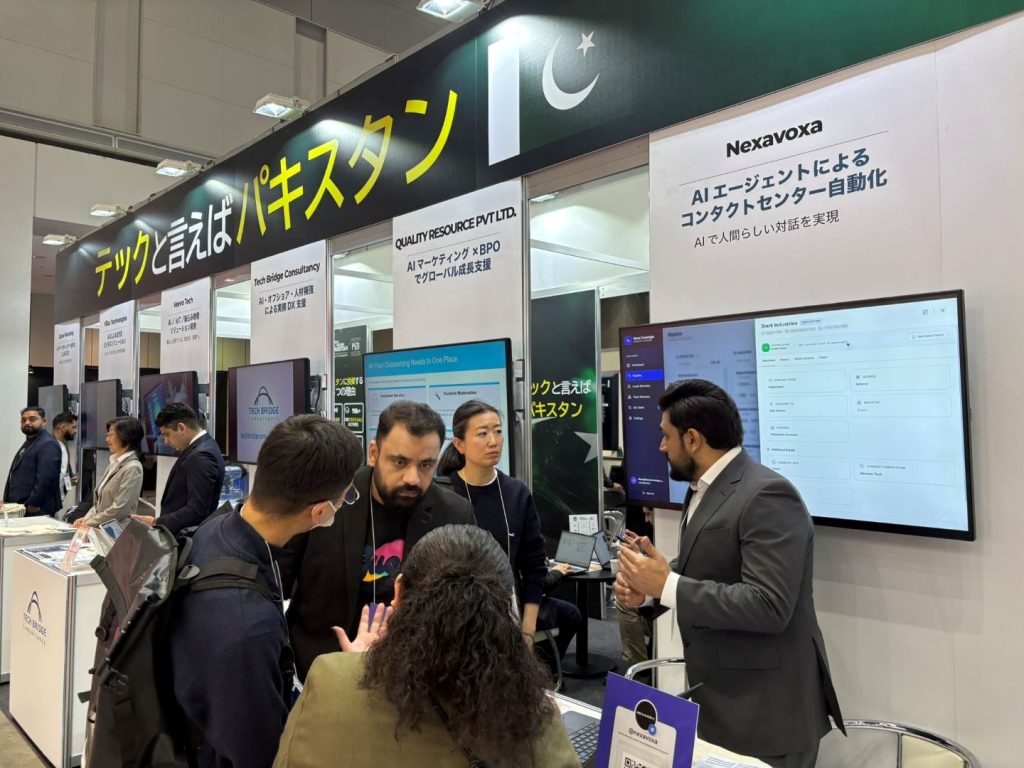



An AI implementation seminar hosted by Deloitte Tohmatsu Venture Support Co., Ltd. explored opportunities for collaboration between Japan and Pakistan in AI research, talent development, business applications, and real-world implementation.
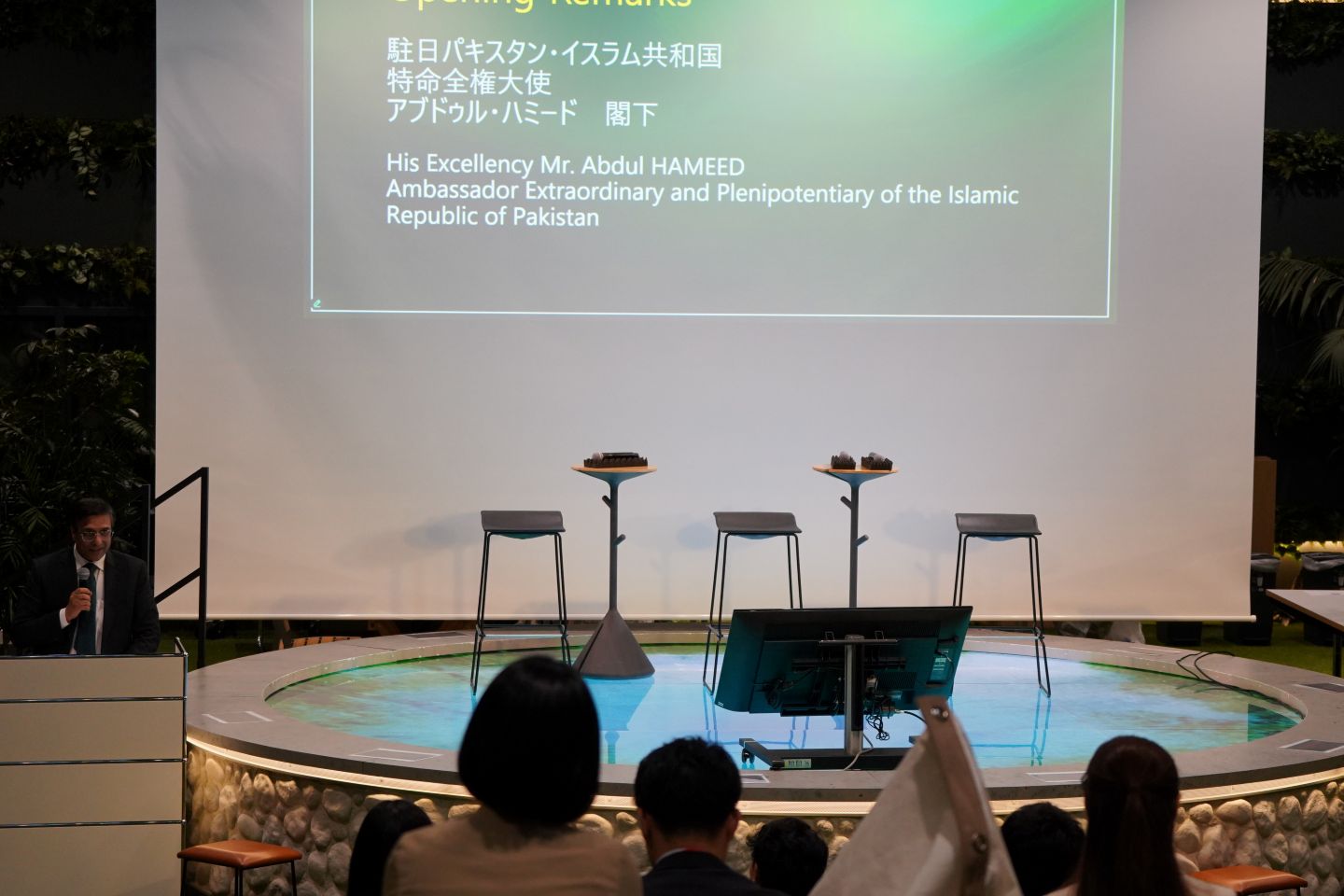
The seminar opened with remarks by Masao Shino, Deputy Director of the SI and DX Office at JICA’s Governance and Peacebuilding Department. He emphasized that DX should not be viewed as the uniform adoption of technology, but as a process that connects research, implementation, and international collaboration to solve real-world challenges. His Excellency Abdul Hameed, Ambassador Extraordinary and Plenipotentiary of the Islamic Republic of Pakistan to Japan, also addressed the audience, highlighting the potential contribution of Pakistan to human-centered innovation that supports both economic development and solutions to social challenges.
The main panel discussion featured Professor Yutaka Matsuo of the University of Tokyo, head of the Matsuo Laboratory and Chair of Japan’s Cabinet Office AI Strategy Council; Professor Yasar Ayaz, Founding Chair and Project Director of the National Center of Artificial Intelligence (NCAI) at the National University of Sciences and Technology (NUST), Pakistan; and Ken Imura, Head of the CVC Unit at Deloitte Tohmatsu Venture Support, who moderated the session.
The discussion examined why Pakistan is evolving from a conventional offshore development destination into a technology partner in the AI era. Professor Ayaz noted that competitive advantage today does not come simply from using existing AI tools or APIs. Rather, it comes from adapting technology to local languages, business processes, operating conditions, and user needs in order to create distinctive value. Pakistan’s AI ecosystem is supported by a growing pool of young specialists in fields including computer vision, LLM fine-tuning, and IoT, as well as by organizations that connect advanced research with practical implementation.
Professor Matsuo also shared his positive assessment of Pakistan’s technology talent, based on his visit to the country. He highlighted the technical capabilities of Pakistani professionals and recognized the work led by Professor Ayaz as an example of advanced AI projects with strong potential for real-world implementation.
AI Pitches by Two Pakistani Companies
Two Pakistani companies delivered pitches presenting AI solutions relevant to business and social challenges faced by Japanese organizations.
AB Ark introduced its capabilities in AI agent development and LLM fine-tuning. The company provides advanced custom development services designed to support operational efficiency and revenue growth. Its pitch presented practical AI solutions for challenges such as automated lead generation and large-scale image processing. For Japanese companies, AB Ark can be a potential partner for validating AI functions tailored to internal workflows, integrating AI into existing systems, and starting with focused proof-of-concept projects before broader deployment.
AI HIVE, a spin-off from Pakistan’s National Center of Artificial Intelligence, presented its work in healthcare and other socially impactful applications of AI. Its examples included an AI-based gait assessment system developed jointly with a Japanese university and a brainwave-controlled wheelchair. The company also introduced applications involving the 3D digitization of historical heritage and AI-based investigation support for law-enforcement organizations. With its capabilities in AI, sensing, imaging, and applied research, AI HIVE can be a strong partner for Japanese healthcare providers, welfare organizations, universities, municipalities, and technology companies pursuing joint research or pilot projects.
The Q&A session focused on implementation-oriented issues, including AI education, the potential for maternal and child health applications in rural areas, language barriers, and communication infrastructure. Professor Ayaz discussed the importance of addressing local operating conditions and referred to prior collaboration with Japanese universities, illustrating how Japan–Pakistan partnerships can be designed around practical needs.
Professor Matsuo also noted that collaboration with Pakistani companies could create opportunities beyond the Japanese market. Pakistan’s networks in the Middle East and Africa may help Japanese companies access markets that can be difficult to enter independently. By combining Japanese strengths in quality, trust, and business know-how with Pakistani partners’ technical adaptability and regional networks, new opportunities may emerge for international expansion.
The seminar demonstrated that Japan–Pakistan collaboration can go beyond conventional outsourcing. It can become a form of co-creation that combines research, talent, advanced technology, and practical implementation. PSEB will continue to support challenge-driven dialogue, proof-of-concept projects, joint research, and joint development between Japanese organizations and Pakistan’s AI companies and research institutions.