



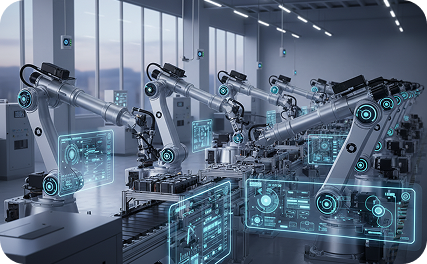
Manufacturing Automation involves the use of advanced technologies to control, monitor, and optimize production processes with minimal human intervention. By implementing robotics, programmable logic controllers (PLCs), industrial sensors, and intelligent software systems, manufacturers can improve efficiency, precision, and consistency across operations. Automation reduces reliance on manual labor for repetitive tasks, minimizing errors and enhancing product quality.
Automated manufacturing systems enable faster production cycles, real-time monitoring, and improved safety on the factory floor. Integrated data collection and analytics provide valuable insights into machine performance, energy usage, and process efficiency, allowing proactive maintenance and reduced downtime. This results in lower operational costs and increased productivity.
Manufacturing automation also supports flexibility and scalability, enabling quick adjustments to production volumes and product variations in response to market demands. By optimizing resource utilization and reducing waste, automation contributes to more sustainable manufacturing practices. Overall, manufacturing automation plays a critical role in modern industry by driving innovation, improving competitiveness, and ensuring consistent, high-quality output in an increasingly demanding global market.